


Paragraphs and the Novel's Pacing

Atualizado: 29 de jun.
Disclaimer
I am a fiction book editor. Whatever tips I give here are for fiction stories, concerning the art of storytelling, and do not apply for non-fiction or poetry.
Today’s tips are also focused on stories for YA and older. The rules for early reader’s stories change completely, precisely because they are still acquiring the “reading skills”, and the layout for those early reader’s books require their own separate explanation.
Short paragraphs do not equal bad paragraphs. It’s all about the context, and here we’ll discuss what makes a short paragraph bad in novels for young adults or older.
Hello everyone, this tip I have for you here can also be found in video form on my YouTube channel, Nagy in the Margins. Feel free to learn wherever is best for you!
YOU MAY THINK that paragraphs are simply related to grammar and that’s it. However, that is not the case. Paragraphs are there on the novels to act as visual cues to your reader, to be the map that guides your reader on the overall flow of your novel.
How many times have you had your book in bed, late at night, and said “just a bit more”, but then you turn the page and you see a whole chunk of text, one single paragraph that covers the entire page?
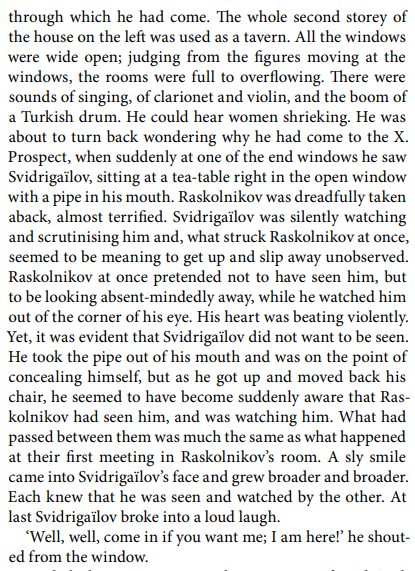
Your brain will immediately go “not now, satan”. You don’t have to read these paragraphs, this page, to know this is a lot of information and that it will require more mental capacity than the standard page.
We often see these chunky paragraphs in non-fiction or textbooks, as they are made to share knowledge, not to tell a fun story. Of course, there are plenty of non-fiction books that are breaking this barrier and making the reading easier, sometimes a bit more fun, but the rule-of-thumb remains: they will always have longer paragraphs than a standard novel.
On the other hand, if you pick up a book, open it, and see the page with very spaced out, short paragraphs, then your brain might say “hm… too childish”.

And why is that? Because early readers, such as children and pre-teens, need more pauses, more breathing room in order to fully understand what is going on, to process the information they’ve just acquired. But for us, book lovers who have read our fair share of stories so far? Then this style will make us lose interest very quickly because it feels too “fact-listing”, not as a fluid story.
How can we find the best length for our paragraphs?
First step is to think: “what is the essence of this paragraph?”
Are we introducing a character? Are we describing a scenario? An action sequence? Are we debating a philosophical theme?
If we are deep in an internal monologue of our main character, longer paragraphs are fine, just as shorter ones will do for action-packed scenes. However, the basic rule you got to remember is: if it is the first time I’m mentioning that, I’ll keep it from 3 to 6 sentences.
A SENTENCE is a group of words that express a complete idea. It always starts with a capital letter and ends with either a full stop (.), a question mark (?), or an exclamation mark (!). Every sentence must have a subject and a verb and can stand on its own, not needing any type of complement. As always, there are exceptions, but this is not a grammar-focused article, so we won’t linger on that.
The reason we should stay between 3-6 sentences is because two sentences is too short to present something for the first time, and six sentences is where you begin to wander exhaustive territory. With seven, chances are the reader will already want to skip what you wrote to get to next good thing.
Let’s imagine I’m presenting you to my character, cleaning a mess she made after hearing plot-essential gossip:
The repetitive movement of scrubbing the carpet back and forth made her arms burn. Leah sat on her heels for a moment, using the back of her wrist to push away the strand of brown hair that stuck to her sweaty face.
If I stop there, then you’re left wondering “where’s the rest”? It is a great start, but it’s not the full deal. And you may be thinking right now that this is great to keep a reader engaged, keep them turning the page! You are right, but the problem comes, as I’ve seen with some of my clients, when you do this for every single paragraph. Can you imagine reading something where every paragraph barely has 3 lines? Look at what happens when we do this:
The repetitive movement of scrubbing the carpet back and forth made her arms burn. Leah sat on her heels for a moment, using the back of her wrist to push away the strand of brown hair that stuck to her sweaty face.
She knew she shouldn’t have brought the glass to her room, but the gossip had been too good to miss.
The effort was making her white skin turn red; she didn’t even have to look in the mirror to know it.
She leaned forward again. The stain had dried, and it didn’t seem to want to come off.
Still, she scrubbed, thinking about what Charlotte had shared.
This isn’t a story. It is a list of facts. You see how much our eyes pause to go from one paragraph to the next? Too many pauses make the text feel broken.
So now you might think that we just have to put everything together, to make it flow better. While yes, it can flow better, the ideas within might get lost. Let’s check how it looks:
The repetitive movement of scrubbing the carpet back and forth made her arms burn. Leah sat on her heels for a moment, using the back of her wrist to push away the strand of brown hair that stuck to her sweaty face. She knew she shouldn’t have brought the glass to her room, but the gossip was too good to miss. The effort was making her white skin turn red; she didn’t even have to look in the mirror to know it. She leaned forward again. The stain had dried, and it didn’t seem to want to come off. Still, she scrubbed, thinking about what Charlotte had shared.
In this case, we have too much going on. The essential part of the gossip, that will move the plot, is buried amidst the many other sentences around it. The essential plot points do not have room to grow and to let the reader breathe and process what they’ve read. This is why I always recommend to keep between 3-5 sentences, 6 at most. In this example scene, we have 8 sentences, which you can see separated here:
The repetitive movement of scrubbing the carpet back and forth made her arms burn.
Leah sat on her heels for a moment, using the back of her wrist to push away the strand of brown hair that stuck to her sweaty face.
She knew she shouldn’t have brought the glass to her room, but the gossip was too good to miss.
The effort was making her white skin turn red;
she didn’t even have to look in the mirror to know it.
She leaned forward again.
The stain had dried, and it didn’t seem to want to come off.
Still, she scrubbed, thinking about what Charlotte had shared.
And this is how they can be placed so the text has a good rhythm and the reader will be able to process every information with ease:
The repetitive movement of scrubbing the carpet back and forth made her arms burn. Leah sat on her heels for a moment, using the back of her wrist to push away the strand of brown hair that stuck to her sweaty face. She knew she shouldn’t have brought the glass to her room, but the gossip was too good to miss. The effort was making her white skin turn red, she didn’t even have to look in the mirror to know it.
She leaned forward again. The stain had dried, and it didn’t seem to want to come off. Still, she scrubbed, thinking about what Charlotte had shared.
With this break, not only do we give our readers a good moment to breathe, but we also create a good pacing of intrigue, where we make a good connection between one paragraph to the next. While the first paragraph wanted to present what Leah was doing, sprinkling the info about the gossip, the second paragraph begins with a reminiscence of the scrubbing task, but the focus will now be the gossip.
Dialogue as a tool
IF YOU WANT TO TAKE THIS EVEN FURTHER, use dialogue as your natural axe. When a new character speaks, it is a mandatory paragraph break. You can also use it as a way to prolong your paragraphs too, where instead of ending the dialogue by itself, you can insert one or two more sentences afterwards to describe a bit of what happened after the character said such thing.
The best thing about dialogues is that you can also tweak things a bit. You can have a dense, atmospheric paragraph of seven or eight sentences, and then you drop in a single, sharp line of dialogue, just to return to the standard size on the next paragraph.
This is how you build a narrative rhythm. A fluid text, with an easy-to-follow novel is a mixture of the different types of paragraphs.

If it is your first time writing, I recommend sticking to the 3-to-6 sentence standard, just so you get familiar with what the standard looks like. But as you progress in your writing path, then you can begin playing with the layout. The more you write, the more you get familiar with the writing mechanisms, and the more you can go outside the rules to find your own voice.
Remember: the layout of the paragraphs, their length is the essence of your story. If you control how the paragraphs are set, you control the reader’s experience.


Comentários